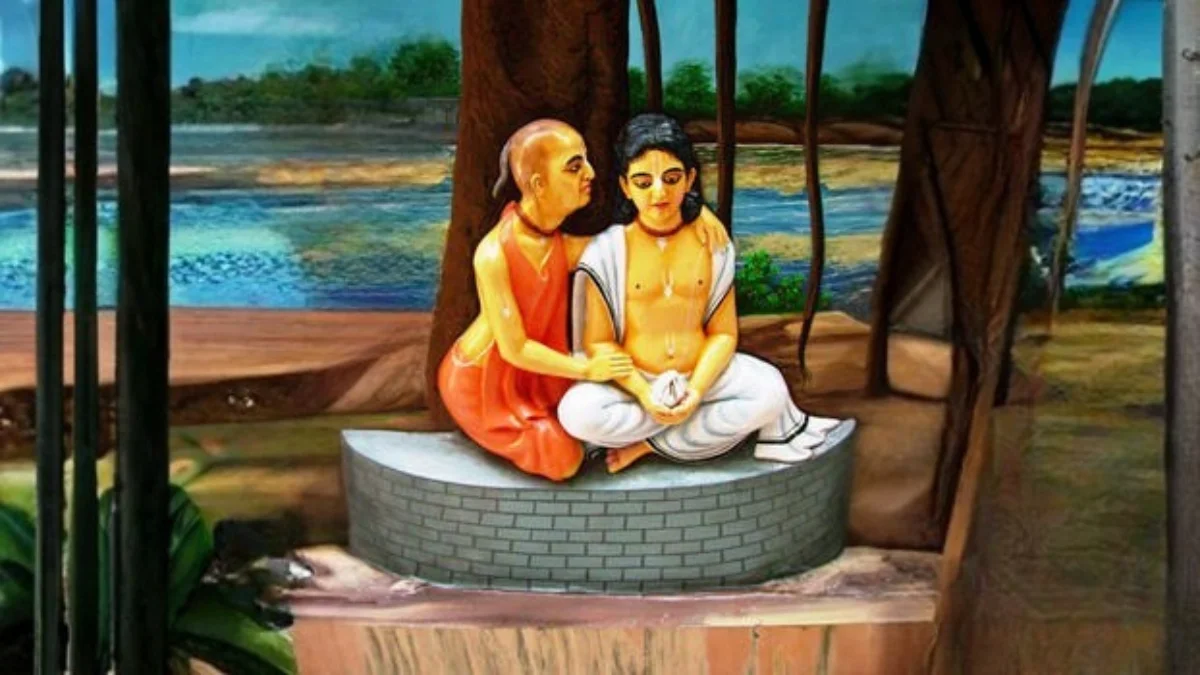
Spiritual Transformation at Gaya
A major turning point came when Nimai traveled to Gaya to perform ceremonies for His departed father. There He met the saint Ishvara Puri, from whom He received spiritual initiation. After this meeting His heart became overwhelmed with love for Krishna. The proud scholar was transformed into a humble devotee who constantly chanted the holy names and spoke about Krishna’s pastimes with deep emotion.
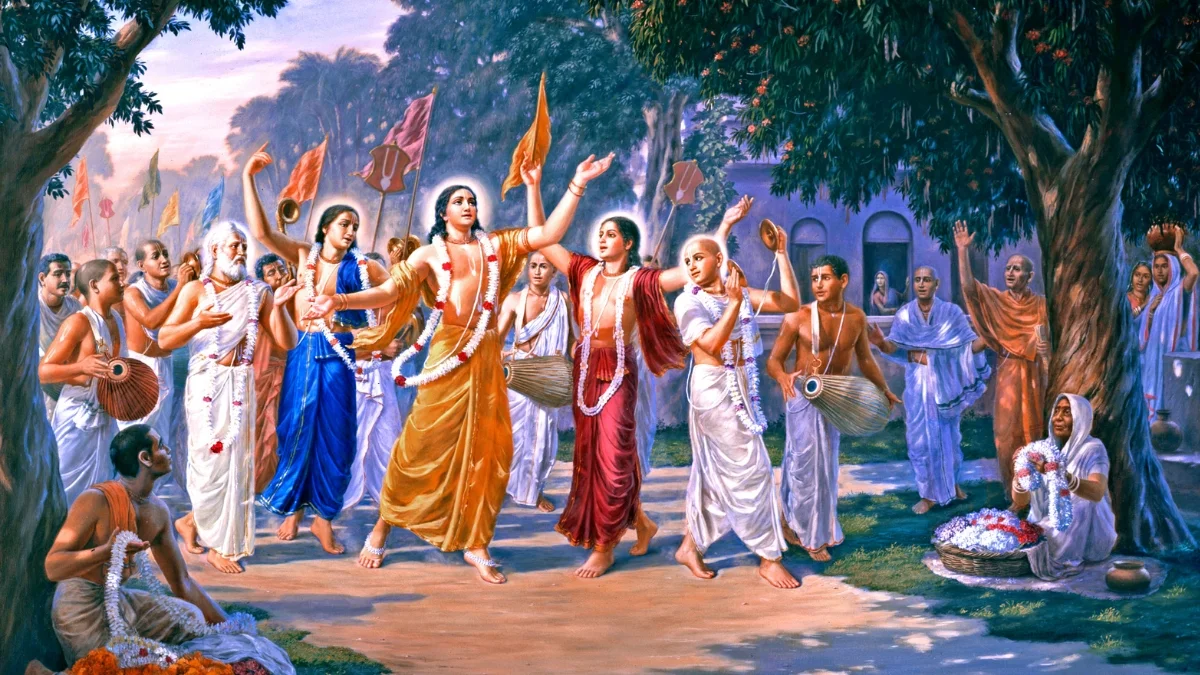
Beginning of the Sankirtan Movement
After returning to Navadvipa, Nimai began organizing Sankirtan gatherings, where devotees chanted the holy names together with music and dancing. The sound of Hare Krishna filled the streets and homes of the town. People from all backgrounds joined the chanting, experiencing spiritual joy and unity. Through this movement Mahaprabhu taught that congregational chanting of God’s holy names is the most effective spiritual practice for this age.
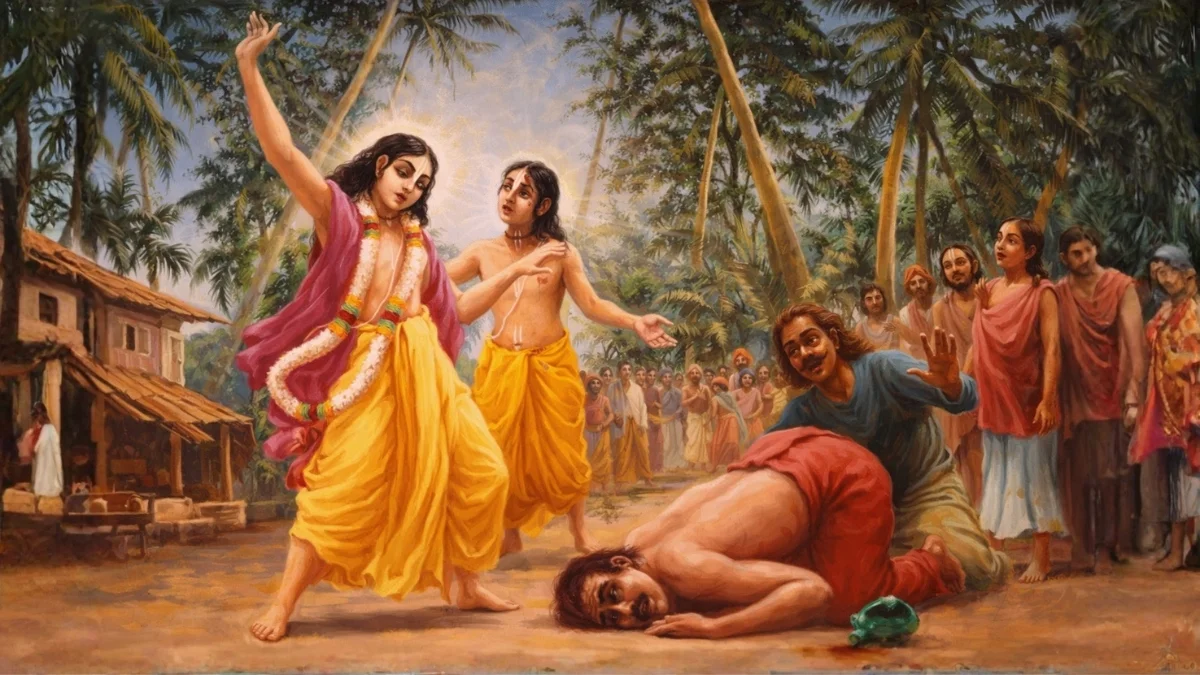
Deliverance of Jagai and Madhai
Among the most famous events of this time was the transformation of Jagai and Madhai, two men known for their violent and sinful behavior. When they insulted Lord Nityananda, Mahaprabhu became angry, but upon seeing their sincere repentance He forgave them and gave them the gift of devotion. Their lives were completely transformed. This event demonstrated the limitless compassion of Mahaprabhu and the purifying power of the holy name.
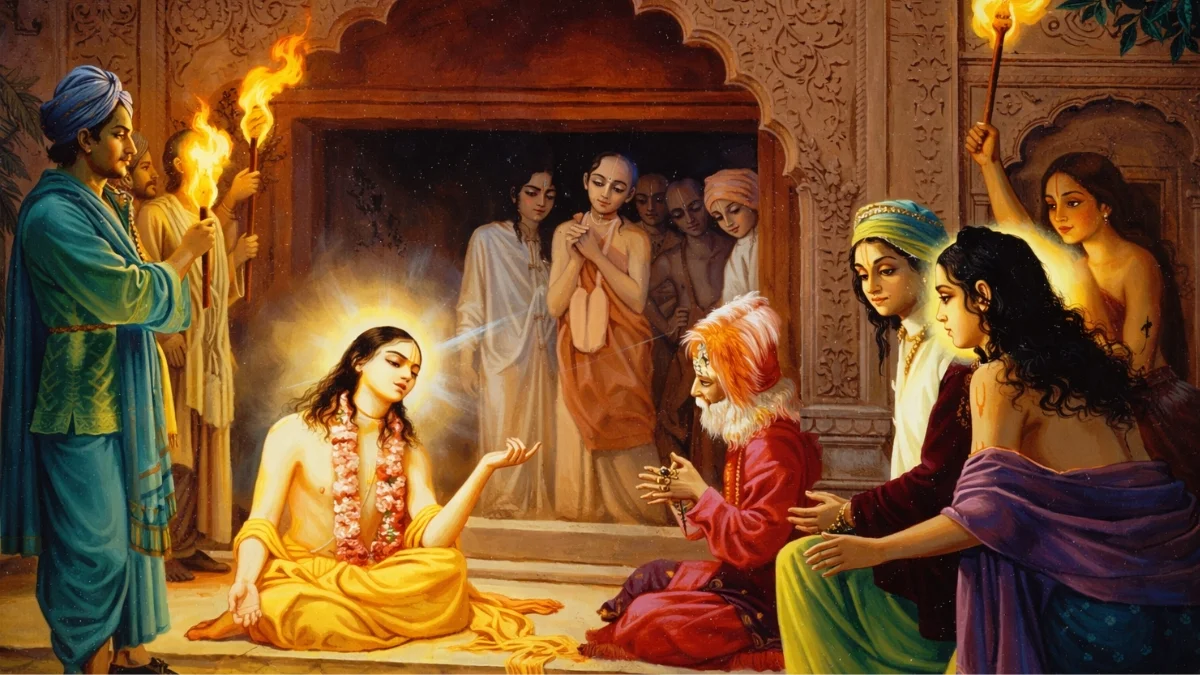
Civil Disobedience against Chand Kazi
When local authorities tried to stop the public chanting of the holy names, Mahaprabhu organized a massive peaceful procession of thousands of devotees performing Sankirtan. The procession marched to the house of Chand Kazi, the local magistrate. Witnessing the devotion and unity of the devotees, Chand Kazi eventually allowed the Sankirtan movement to continue freely. This event showed how spiritual devotion could peacefully overcome oppression.