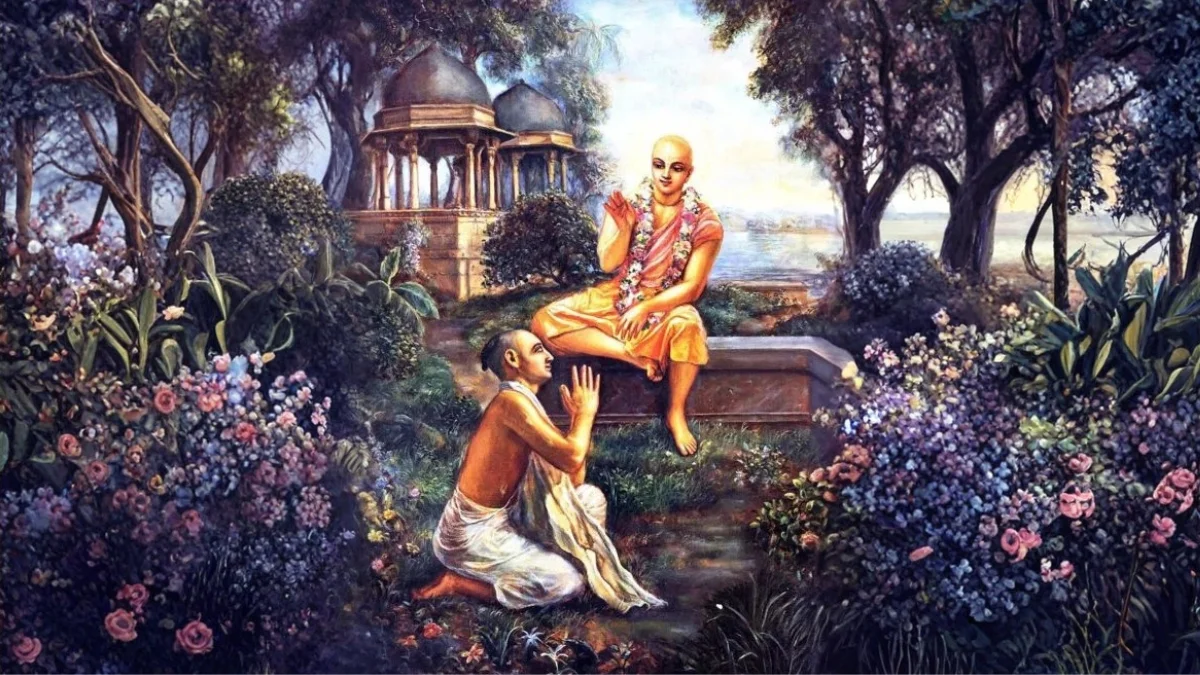
Instructing Rupa Goswami
At Dashashwamedha Ghat in Prayag (modern Prayagraj), Śrī Chaitanya Mahaprabhu met Śrī Rupa Goswami, who had just left his high government position under the Sultan of Bengal. For about ten days, Mahaprabhu personally instructed him on the science of bhakti (devotional service). He explained the stages of spiritual development—from faith (śraddhā) and association of devotees to pure love of God (prema).
Mahaprabhu also taught the deep principles of rasa-tattva, the spiritual emotions of loving exchange with Krishna. These teachings later became the philosophical foundation for Rupa Goswami’s great works such as Bhakti-rasāmṛta-sindhu and Ujjvala-nīlamaṇi, which systematically presented the theology of Gaudiya Vaishnavism.
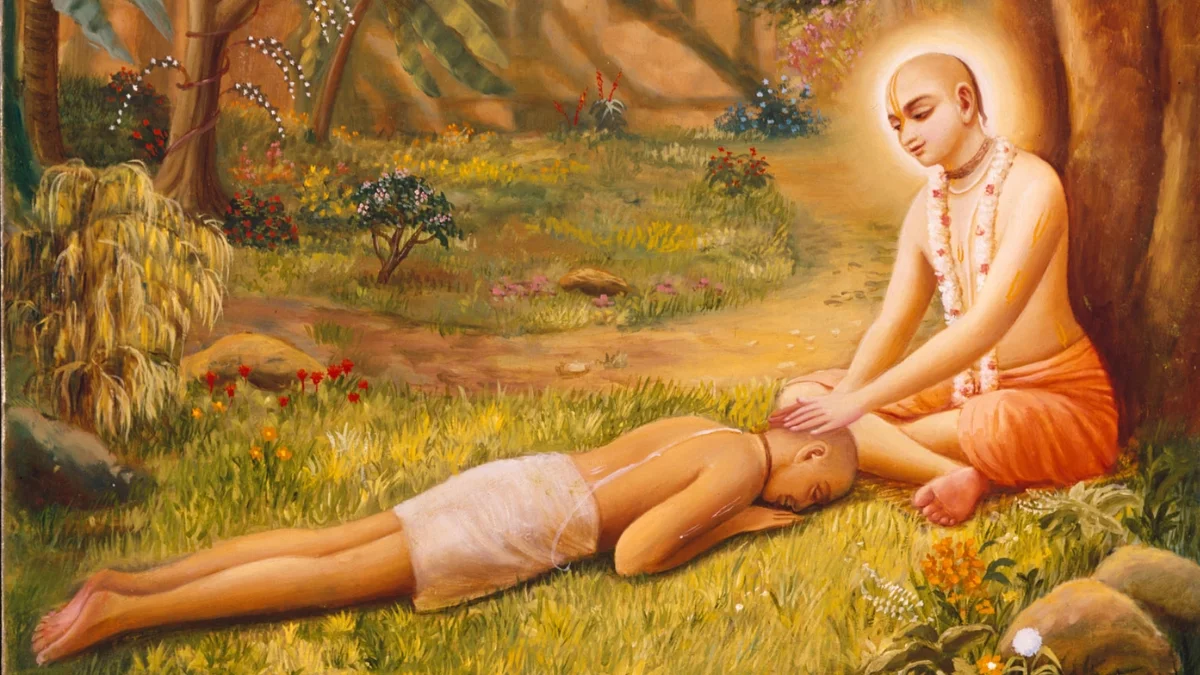
Instructing Sanatana Goswami
Later in Varanasi (Kashi), Mahaprabhu met Śrī Sanatana Goswami, the elder brother of Rupa Goswami. Over two months of instruction, Mahaprabhu explained essential spiritual truths, including the eternal identity of the soul (jīva-tattva), the nature of the Supreme Lord Krishna, and the process of pure devotional service.
He also clarified the relationship between the living being and God, the nature of the material world, and the path for attaining Krishna. These teachings became the philosophical basis for many Gaudiya Vaishnava scriptures, especially Sanatana Goswami’s works such as Brihad-bhagavatamrita and Hari-bhakti-vilasa, which helped guide devotional practices for future generations.
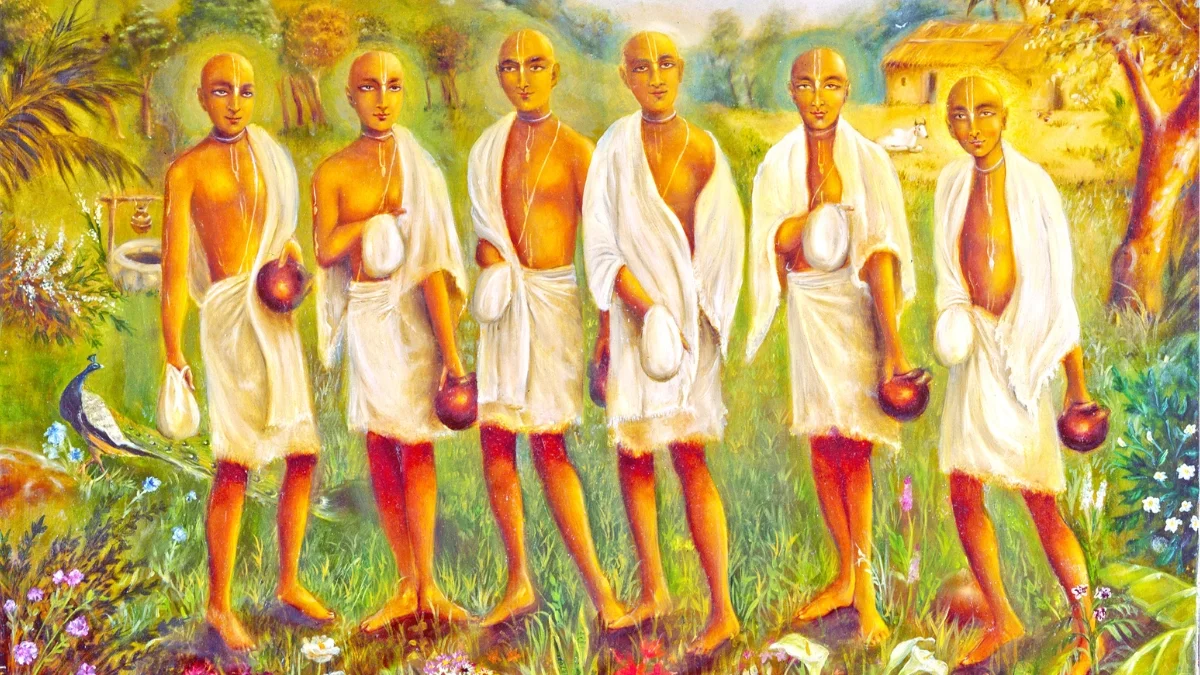
Establishing the Six Goswamis of Vrindavan
Śrī Chaitanya Mahaprabhu entrusted His foremost disciples—Rupa Goswami, Sanatana Goswami, Raghunatha Dasa Goswami, Raghunatha Bhatta Goswami, Gopala Bhatta Goswami, and Jiva Goswami—with an important mission in Vrindavan. They were instructed to rediscover the lost holy places of Lord Krishna’s pastimes, establish temples, and write authoritative books explaining the philosophy and practice of devotion.
Living very simple and renounced lives, the Six Goswamis produced profound spiritual literature and revived the sacred geography of Vrindavan, Govardhan, and Radha-kunda. Their work firmly established Vrindavan as the spiritual heart of Gaudiya Vaishnavism.
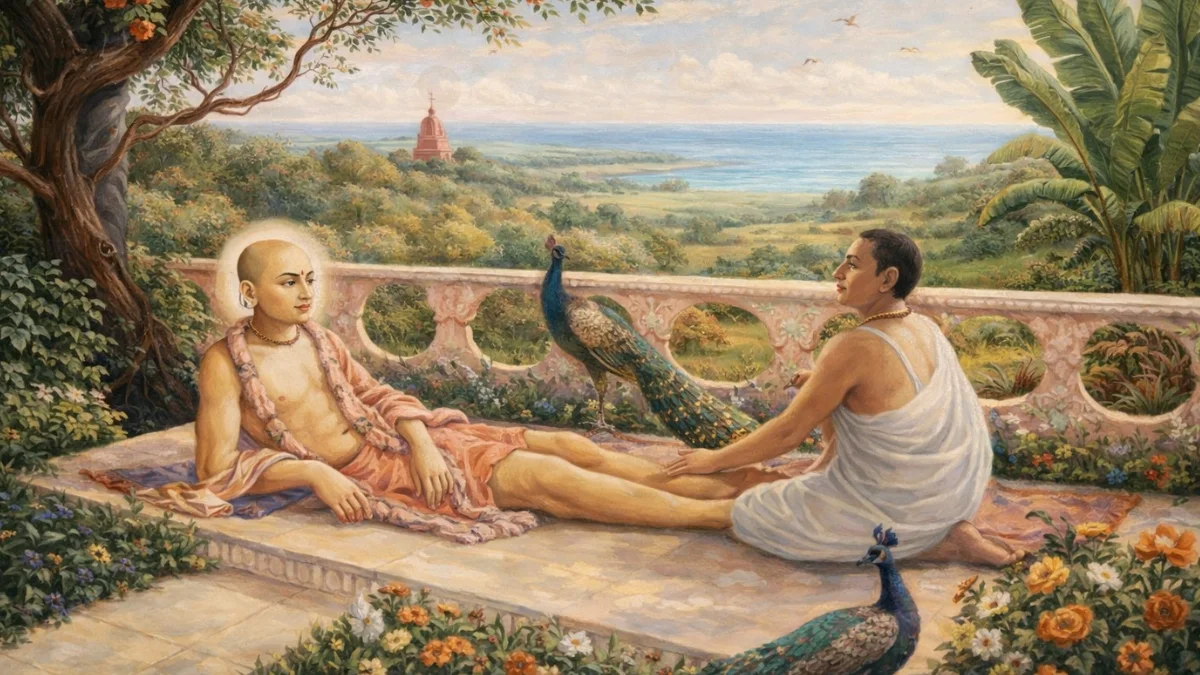
Interactions with King Prataparudra
In Jagannath Puri, King Prataparudra Deva, the ruler of Odisha, deeply desired to meet Chaitanya Mahaprabhu. However, Mahaprabhu initially refused because He had accepted sannyasa and wanted to avoid association with worldly power and politics. Despite this, the king humbly served the devotees and supported the Lord’s mission.
During the Ratha Yatra festival, Prataparudra approached Mahaprabhu in a humble mood, reciting verses from the Gopi-gita of the Srimad Bhagavatam while gently massaging the Lord’s feet. Moved by his sincere devotion, Mahaprabhu embraced him, thus blessing the king with His mercy.
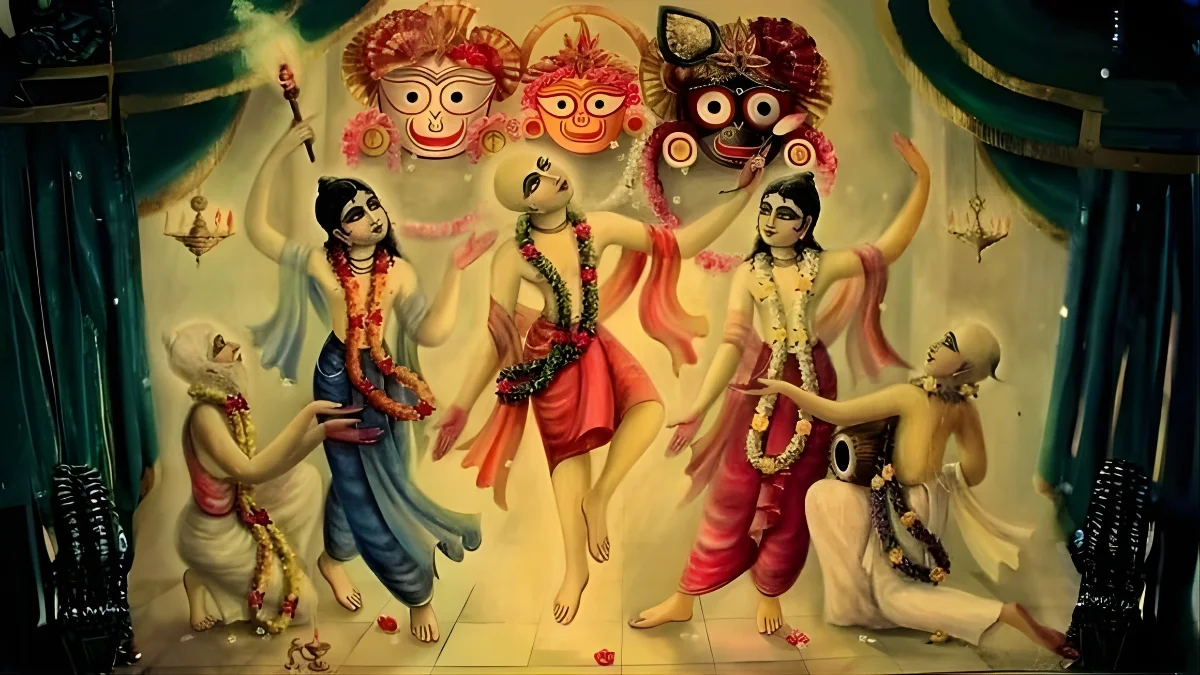
The Gambhira Pastimes
In the final years of His manifest pastimes, Mahaprabhu resided in a small room in Jagannath Puri known as the Gambhira. There, along with His intimate associates Svarupa Damodara Goswami and Ramananda Raya, He spent long nights absorbed in intense spiritual emotions of separation from Lord Krishna (vipralambha-bhava). These ecstatic states were expressions of the divine mood of Srimati Radharani’s love for Krishna, which Mahaprabhu came to experience and reveal. His profound experiences of divine love, sometimes accompanied by extraordinary physical transformations and ecstatic symptoms, revealed the deepest mysteries of prema-bhakti, the highest form of devotion.